Follow the Water: What Your Gutters and Downpipes Are Telling You About the House
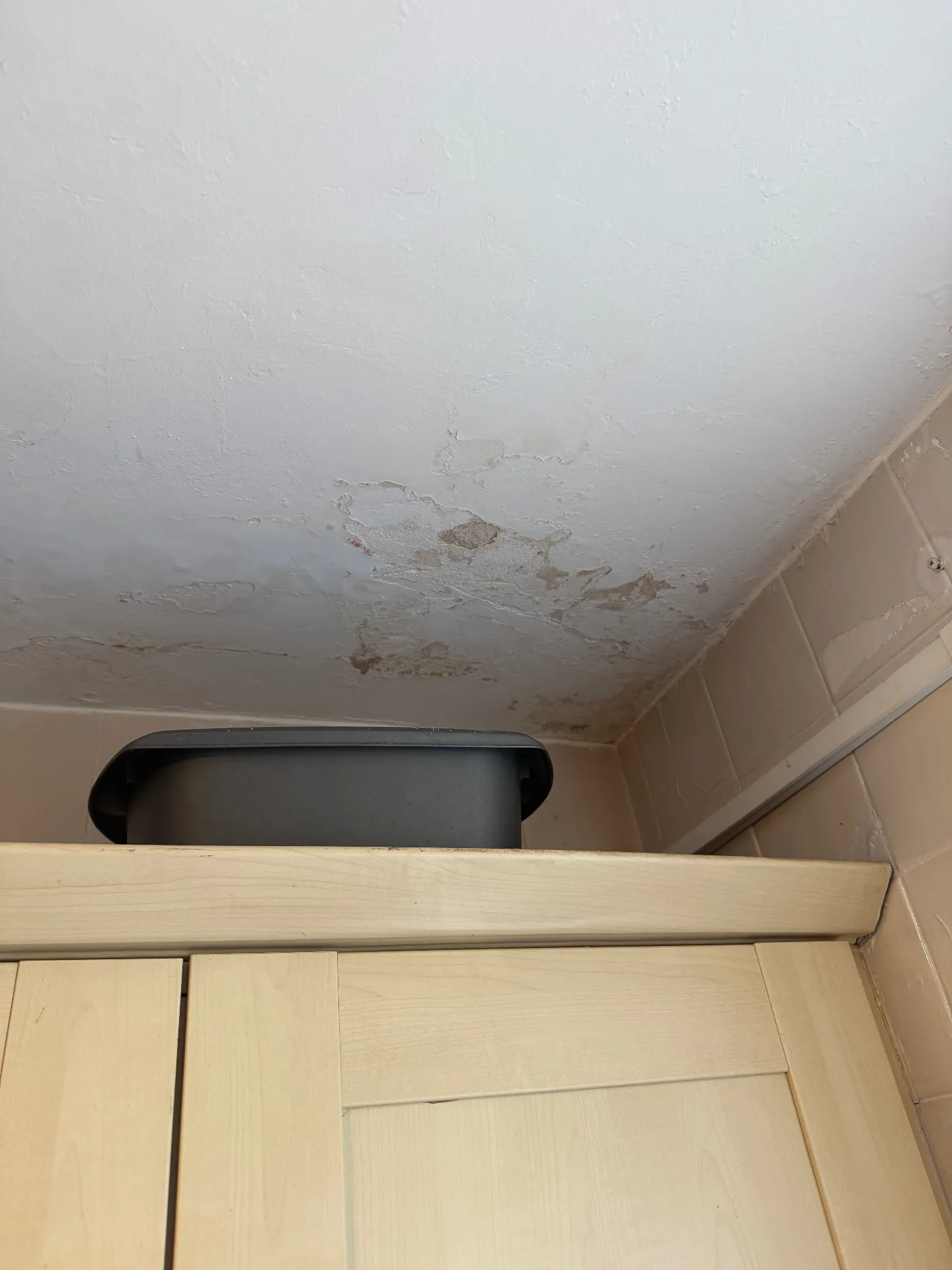
I'll give you the phone call I get nearly as often as the cracks one.
Someone rings up. Their RICS survey's back, there's a patch of damp on the corner wall of the master bedroom upstairs. The surveyor's written "possible penetrating damp, further investigation recommended". A damp specialist has already been round and quoted £3,800 to hack off the plaster, inject the wall, and re-render.
I usually ask one question: "Where's the downpipe that comes down that corner of the house?"
Nine times out of ten, there is one. And it's got moss growing out of the joint between two of the sections, and it's dripping every time it rains. And the wall behind it has been getting hosed down for the last five winters.
Cost of the real fix, once you know: a Saturday morning and a tube of gutter sealant. Maybe eight quid. Another few hundred to let the wall dry out and redecorate inside once it's stopped getting fed. That's it.
That's why builders start every damp inspection outside, looking up.
Have a builder look at your damp — £59
Damp isn't spontaneous. Something is delivering water.
Here's the thing about damp in an old house. It's almost never mysterious. Something is delivering water somewhere it shouldn't be. Your job at a viewing, and mine on a phone call reviewing your RICS survey, is to work out what's delivering it and how much the delivery system costs to fix.
Gutters, downpipes and drainage cause more damp in UK homes than rising damp does. I say that as a builder who's been called out to plenty of both. And the fixes for the external stuff are usually a fraction of the price of the fixes for the internal stuff. Which is why "follow the water" is always the first question, not the last.
If your RICS survey has already flagged rising or penetrating damp, or you're staring at a damp-proofing quote in the thousands, come back to the external inspection before you write the cheque.
What I actually look at, in order
Gutters, from the ground, with the naked eye first.
Walk to a corner of the house. Look up at the gutter. What you want to see:
- A dead-level (or nearly level) line. If a section dips or sags, water pools there instead of running to the downpipe, and eventually the joint gives up.
- Nothing growing out of it. Moss is a warning. Grass is worse. A birch seedling is a red flag.
- Clean wall directly below. Green algae streaks, dark staining or vertical dirty lines running down the brickwork under the gutter mean water's been going over the front lip instead of down the pipe.
- No rust runs. Cast-iron gutters that have gone rusty leave orange streaks down the wall. That's a proper job to fix, but not a catastrophic one.
Downpipes, from top to bottom.
Walk round the whole house. Look at every downpipe. Follow it with your eyes from where it joins the gutter to where it ends. What I'm looking for:
- Dark staining or algae on the wall beside or behind the pipe. Water's escaping and running down the outside of the wall instead of the inside of the pipe.
- Split joints. Plastic downpipes split at the joints most often, especially the ones facing south that get baked by the sun. Cast iron rusts through at the back where you can't see it.
- Where does the pipe end? This is the bit most buyers miss entirely.
The bottom of the downpipe matters more than the top.
A downpipe that empties into a proper gulley (the grated hole at the bottom, cast iron or plastic) which connects to a drain is doing its job. A downpipe that just stops six inches above a flowerbed, or empties onto a paving slab, is dumping an entire roof's worth of rainwater right next to the foundations every time it rains. That's how you get "rising damp" in a house that hasn't actually got rising damp. That's how you get frost damage to the bricks at the base of the wall. That's how you get water finding its way under a suspended floor.
If the gulley's cracked, or full of leaves, the water backs up and sits at the base of the wall instead of going down the drain. Same result.
The ground itself.
Now look down. Walk round the outside of the house and look at the paving, patio, path or driveway against the walls. You want to see ground that slopes gently away from the house. A couple of degrees is plenty. What you often see, especially on Victorian and Edwardian properties where things have settled for a hundred years, is ground that now slopes gently towards the house.
You don't need a spirit level to spot it. Look at where the paving meets the brick. If there's a worn groove in the mortar course, or a dark tide-mark stain running along at that height, water's been sitting there and running along the wall for years.
The sneaky ones surveyors miss
A few that catch buyers out even when they've paid for a Level 3:
Hoppers. On older houses, especially where there's a two-storey extension or a back addition, you'll see a metal or plastic box at first-floor level where two pipes meet. That's a hopper. Leaves collect in them and they overflow, and the overflow runs down the wall behind the hopper. You literally can't see the problem from the ground, and a fair number of surveyors don't spot them either.
Your neighbour's water. Terraced and semi-detached houses share a party wall, and often the neighbour's downpipe is closer to your wall than yours is. If theirs is broken, you get the damp. You can't fix theirs. You have to ask. Have that conversation before you exchange, not after.
Parapet gutters and flat-roof outlets. If the house has a flat roof or a parapet gutter (the type hidden behind brickwork on some Victorian and Edwardian houses), the outlet is often just a hole in a lead-lined gully. Block that and the water pools until it finds another way out, which is usually straight through your ceiling. These get flagged as "roof leaks" in RICS surveys when they're really "blocked drainage" — cheaper to fix, if you diagnose it right.
Valley gutters between two pitched roofs. Where two roof slopes meet, there's a valley, usually lead. Leaves collect there, water backs up under the tiles or slates, and you get a ceiling stain in the room below that looks like a plumbing leak. It isn't. It's a blocked valley.
Chimney stack flashing. Not strictly guttering, but I'll mention it because it fits the same "water going the wrong way" theme. A ceiling stain in the corner of an upstairs room directly under a chimney is almost never a chimney fire risk, and almost always failed lead flashing where the stack meets the roof. Have a look at our post on chimney stack and flashing findings if that matches your situation.
How I diagnose damp on a phone call
When someone rings me about a damp patch, before I even look at the photos, I run through this list. You can run it yourself.
- Which floor is the damp on? Damp on the ground floor is much more likely to be rising damp, ground water, or splashback from a broken gulley. Damp above the ground floor is almost never rising damp — it's coming from above. Follow the water up.
- What's directly above the damp patch, outside the house? A gutter joint? A downpipe? A window sill? A hopper? A chimney stack? The answer is almost always one of those five.
- Is the damp worst at floor level or ceiling level? Rising damp is a tide-mark going upwards. Penetrating damp from above is a plume going downwards. If it's ceiling-first, you're looking outside and up.
- Has anything changed recently? New patio outside? Rendered wall three years ago? Extension built? Downpipe re-routed? Loft insulation upgraded? Damp usually turns up months after the change that caused it.
- When does it appear or get worse? After heavy rain: external. In winter with the heating on and windows closed: probably condensation. In summer when the ground dries: possibly a shrinkage crack in the render letting water in.
Nine times out of ten, three of those five questions narrow it down to a specific external defect that costs a fraction of what an internal damp treatment costs to fix.
Send us your damp photos — we'll tell you what it is — £59
The seasonal check calendar
If you already own the house, an hour on this at the right time of year saves proper money down the line.
- September / October. Get the leaves out of the gutters before the autumn wind fills them. This is the single biggest bit of maintenance most houses miss. Once a year is fine, twice a year if there are trees within twenty feet.
- November. Walk round the house during a proper downpour. If any gutter overflows, or any downpipe leaks at a joint, mark it and get it fixed before the January storms. Rain in winter is heavier and more sustained than in summer.
- February. Check for frost damage on brickwork at the base of walls, especially near downpipes that might have been leaking through the cold snap. Spalled bricks (where the face has flaked off) usually mean water got in and then froze.
- May. Check the pointing on chimney stacks, parapet walls, and any high-level brickwork you can safely see. Winter is what breaks pointing; spring is when you spot it before the autumn rain finds it.
What things actually cost
Rough ranges, cheap end to serious end:
- Clean the gutters. £80 to £150 for a two-storey house. Do it every autumn, or every six months if there are trees close by. Best-value building maintenance there is.
- Reseal a leaking joint. £30 in materials if you can reach it yourself. A local handyman, £80 to £120.
- Replace a section of plastic gutter or downpipe. £150 to £300 depending on access and length.
- Replace the whole run of plastic guttering on a terraced house. £600 to £1,200.
- Replace cast iron with cast-iron-effect aluminium (for a nicer-looking period house). £2,500 to £5,000 for a whole house. Just repainting the original cast iron, if it's not too far gone, is £600 to £900.
- Sort out a slumped gulley or install a proper drain connection. £150 to £400 per point, depending on what shows up when they dig it up.
- Regrade the paving away from the house. £600 to £2,000+ depending on the area.
Compare any of those numbers with the £3,800 internal damp quote at the top of this article, and you can see why "follow the water" comes first.
What to do at a viewing, in five minutes
If you're on a second viewing and you can only do a handful of things, do these.
- Walk the full outside of the house. Look up at every gutter, look down at where every downpipe ends.
- Look for green streaks, dark staining or moss on the walls under and beside the guttering.
- Check the ground on every side. Slopes towards the house or away from it?
- If it's rained in the last day, look for wet patches on the outside walls right next to the downpipes.
- Best of all: book the viewing for a rainy day. Everyone else avoids them. Ten minutes in a proper downpour will tell you more about how a house handles water than any RICS survey can.
One last thing
If your RICS survey has flagged damp, before you spend a penny on a damp specialist, send us the RICS survey and photos of the outside walls, gutters and downpipes on the affected side of the house. Nine times out of ten it saves the money. And the tenth time, at least the specialist you do book gets the right job to price instead of guessing.
Damp is almost never mysterious. It's just water going where it shouldn't, and something upstream telling you where.
Frequently asked questions
How can I tell if damp on my wall is coming from a gutter or downpipe?
Look outside directly above the damp patch. If there's a gutter joint, hopper or downpipe within a metre or two, that's almost certainly the source. Green algae, dark staining or moss on the wall by a downpipe is a giveaway. Damp above the ground floor is almost never rising damp — it's coming from above.
How much does it cost to clean gutters on a two-storey house in the UK?
Roughly £80 to £150 depending on your area and access. It's the single best-value bit of building maintenance there is. Once a year in autumn is fine, twice a year if there are trees close to the house.
Do I really need to replace all my gutters if one section is leaking?
No. Plastic guttering can be repaired section by section, and a leaking joint can often be resealed for the cost of a tube of sealant. Cast iron can be similarly patch-repaired or repainted. Full replacement is only necessary when the whole run has failed.
My downpipe just empties onto the paving. Is that a problem?
Yes, quietly. Every drop from your roof is being dumped next to the foundations. That causes damp at the base of walls, spalled brickwork in winter, and water under suspended floors. Fitting a proper gulley and drain connection is usually £150 to £400 per point and pays for itself the first time you avoid a damp treatment quote.
Should I get a damp specialist or a builder to diagnose damp?
Get a builder to look at it first. Damp specialists sell damp treatments, which biases the diagnosis. A builder has no product to sell and will usually spot an external cause — a blocked gutter, a failed downpipe joint, a ground level issue — that fixes the problem for a fraction of the treatment cost.
What's the difference between rising damp and damp from a leaking gutter?
Rising damp forms a tide-mark going upwards from ground level, usually with visible salts. Damp from above (a leaking gutter, downpipe or roof) shows as a downward plume or a corner patch, often on upper floors, and gets worse right after heavy rain. If it's above the ground floor, it isn't rising damp.
Can I check gutters myself, or do I need a specialist?
For diagnosis, do it yourself: a walk around the house in the rain tells you 80% of what you need to know. For cleaning at height, use a professional with the right access equipment unless you're confident on a ladder and have someone footing it. It's not worth a fall for £100.
Work it out yourself
Free tools built on real 2026 builder rates. No sign-up, no email.