Chimney Stack and Flashing Issues in a RICS Survey: What to Check and What It Costs
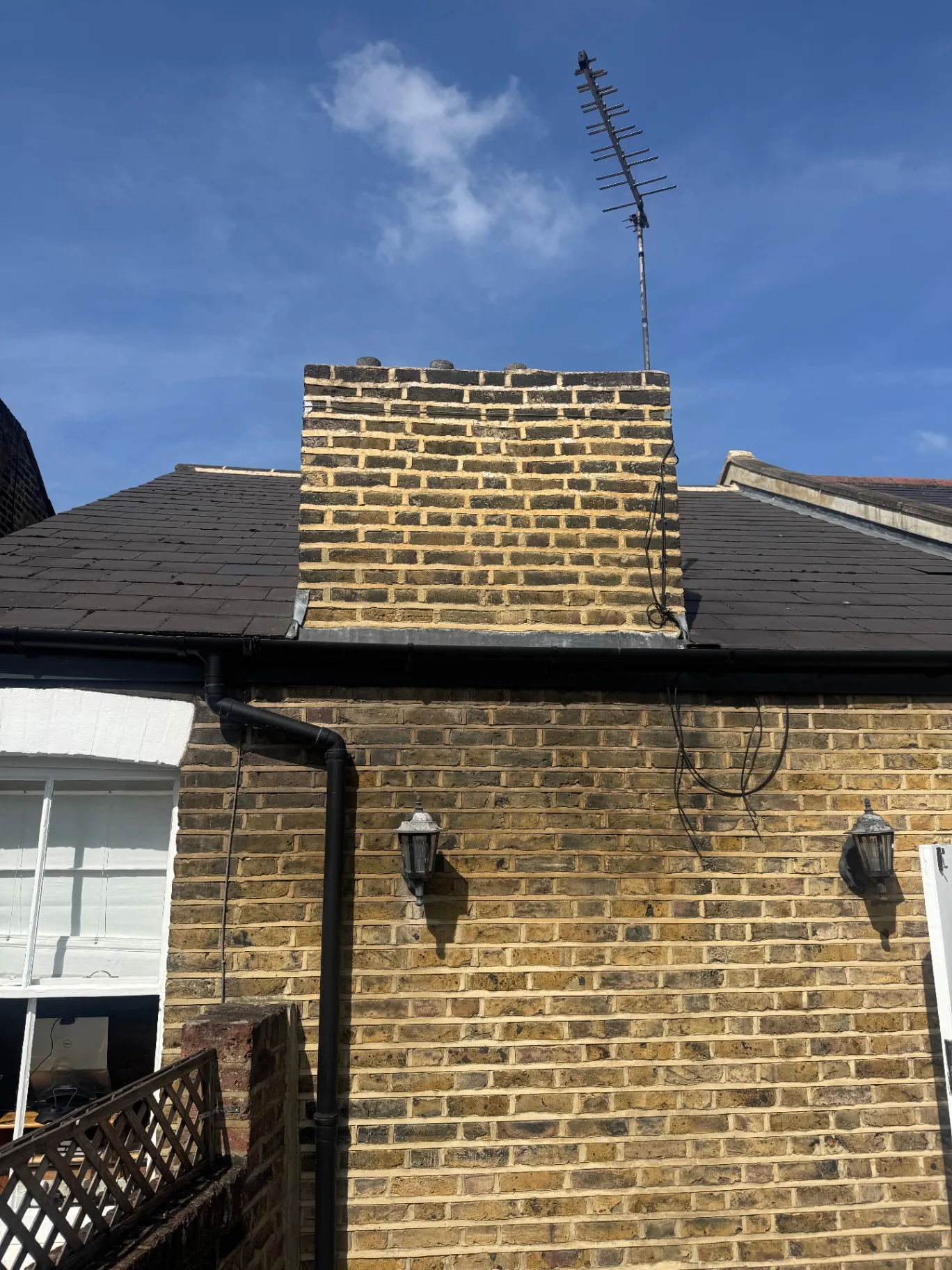
If you're buying a Victorian or Edwardian terrace, semi, or almost any period property, there's a good chance your RICS survey mentions the chimney stack. It's one of the most exposed parts of any house — sitting above the roofline, taking the full force of weather from every direction — and one of the most commonly deferred maintenance jobs, because it's expensive to access and easy to ignore from the ground.
Chimney work rarely arrives on its own. The RICS survey repair cost calculator prices the stack alongside everything else yours found, which is the position to open a renegotiation from.
Why Chimneys Fail Before the Rest of the Roof
A chimney stack is a tower of brick or stone sitting proud of the roof, pointed with mortar that has to withstand rain, frost and wind-driven moisture from all sides. Mortar erodes faster here than on a sheltered wall, and once water gets behind the pointing, frost damage (freeze-thaw cycling) accelerates the problem quickly.
Disused chimneys — capped or simply no longer used for a fire — are often worse, because without heat rising through the flue, the brickwork stays damp for longer after rain, and there's less incentive for anyone to have maintained it.
The Three Things a RICS Survey Usually Flags
Repointing needed Mortar has eroded, cracked, or is missing between bricks. On its own, this is a maintenance job, not a structural one — but ignored long enough, it lets water into the brickwork and eventually the roof structure below.
Cracked or missing flaunching "Flaunching" is the mortar fillet at the top of the stack that holds the chimney pots in place and sheds water away from the brickwork. It's often the first thing to fail because it's the most exposed part of the whole structure. Cracked flaunching lets water straight down into the flue and stack.
Failed lead flashing The lead (or increasingly, modern flexible flashing) that seals the join between the chimney stack and the roof covering. This is where the vast majority of chimney-related leaks actually originate — not from the brickwork itself, but from the flashing letting water in at the junction.
Reading the RICS Survey Language
"Chimney stack requires repointing" — routine maintenance, usually not urgent unless combined with other flags. Get it costed and factor it into your first-year budget.
"Evidence of water ingress around chimney breast" — this is describing a symptom (a damp patch, staining) rather than the cause. It's very likely the flashing, not the brickwork itself, but it needs an inspection to confirm before you can cost the fix properly.
"Recommend chimney stack inspection prior to exchange" — the surveyor has seen enough to be concerned about safety or significant water ingress and wants a specialist (often a roofer, sometimes a structural engineer for lean or movement) to look before you commit.
"Chimney leaning / out of vertical" — this is the one to take seriously. A leaning stack can mean anything from a cosmetic lean that's been stable for decades to an active structural problem. It always warrants a proper assessment before you proceed.
Realistic Repair Costs
| Job | Typical cost | Worth knowing |
|---|---|---|
| Repointing, single stack | £400 – £900 | Scaffold/tower access is usually the main cost driver, not the mortar work itself |
| Flaunching renewal | £250 – £500 | Often done at the same time as repointing to share access costs |
| Lead flashing replacement (per stack) | £350 – £700 | Cheaper materials (mortar fillet) exist but lead lasts far longer |
| Full chimney stack rebuild | £2,500 – £5,000 | Needed where brickwork has failed structurally, not just the pointing |
| Chimney capping (disused flue, with ventilation) | £150 – £350 | Prevents water ingress while keeping the flue ventilated to avoid trapped damp |
| Scaffold tower/access (typical terrace) | £400 – £900 | Often the single biggest line item — worth bundling multiple roof jobs into one visit |
The Access Cost Trap
Here's the thing most buyers don't realise: on a typical terraced house, scaffolding or tower access to reach the chimney can cost as much as the repair work itself. This is exactly why it's worth getting a full roof assessment rather than just a chimney quote — if the flat roof over the rear extension or the roofline generally also needs attention, doing it all in one visit can save hundreds of pounds in duplicated access costs.
How Chat to Your Builder Helps
For £59, we'll review the RICS survey's chimney and roof findings together, tell you what's genuinely urgent versus routine maintenance, and give you realistic costs — including flagging where bundling jobs together would save you money on access.
We've helped buyers weigh up chimney repairs on period terraces across London, Bristol, Edinburgh, York and Cambridge. If your RICS survey also flagged the flat roof or general roof age, see our guides on flat roof survey findings and what "roof covering is aged" really means.
Book your consultation today and find out exactly what your chimney needs — and what it'll cost.
Frequently asked questions
Is a leaning chimney always a serious structural problem?
Not necessarily — many period chimneys have a slight lean that's been stable for decades. But it always needs a proper assessment, because the alternative (active movement) can affect the roof structure it sits on. Never assume it's fine without someone confirming it.
Do I need to remove a chimney I'm not going to use?
No — capping it with proper ventilation is usually cheaper and preserves the character of a period property. Just make sure the cap allows some airflow through the flue, otherwise trapped moisture can cause damp inside the chimney breast.
Why does chimney repair access cost so much?
Chimneys sit at the highest point of the roof, so reaching them safely usually needs scaffolding or a tower, which is charged separately from the actual repair labour. This is why bundling chimney work with other roof jobs in one visit is worth asking about.
Work it out yourself
Free tools built on real 2026 builder rates. No sign-up, no email.